
What Does a PBL Coach Do? Inside the Role of a Project Based Learning Coach

What Is a PBL Coach?
One of the most common questions I hear from school leaders is:
“What exactly does a PBL coach do and how is it different from an instructional coach?”
After more than a decade in coaching roles myself, I get it. The term' PBL coach' is starting to appear in more districts, but it’s still relatively new. That's why I sat down with Keely Cox, an instructional coach at Premier Charter School who focuses on PBL, to hear how she defines her role and, more importantly, how she supports teachers in bringing project-based learning to life.
We captured our conversation in a video (embedded below) so that you can hear her voice and perspective directly.
5 Key Roles of a PBL Coach
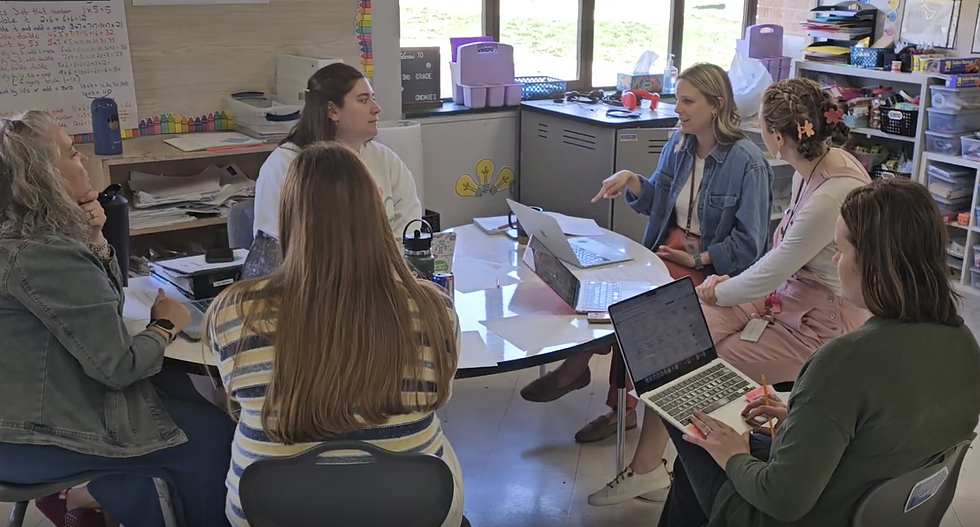
In the video, Keely offers insights into being a PBL coach by sharing her day-to-day experiences and her favorite aspects of the role. Here are a few key takeaways
from our conversation:
PBL Coaches Help Teachers Make Learning Authentic: Keely begins by sharing what drives her work: helping teachers see how content, standards, and skills can connect meaningfully to students' lives. Whether it's aligning math to real-world data or fostering a collaborative culture, she helps teachers build learning experiences that feel relevant and powerful.
PBL Coaches Are Planning Partners for Teachers: One of the biggest misconceptions about PBL is that you can jump in and figure it out as you go. Keely’s own early experiences doing PBL in isolation shaped her firm belief that coaching matters. She emphasizes that having someone to plan and collaborate with makes all the difference, especially when teachers are trying something new or ambitious.
PBL Coaches Model Strategies and Foster Reflection: From sentence frames to gallery walks, Keely shares tools that support deeper learning, but her coaching doesn’t stop at handing teachers a strategy. She models how to use it, co-plans how to embed it, and follows up to reflect together. This full-circle support helps teachers build both confidence and competence.
PBL Coaching Is a True Partnership: Keely sees her role as a collaborator, not a consultant. She brings the PBL framework and practices, while teachers bring content knowledge, knowledge of students, and curriculum context. Together, they co-create questions, final products, and plans that reflect the unique needs of their classrooms.
Student-Centered Coaching Leads to Student-Centered Learning. Everything comes back to students. Keely describes moments where student voice reshaped a final product, or where students reflected deeply on what they learned. These are the moments that stick and they’re only possible when teachers are supported to teach with vision, passion, and purpose.
Watch the Full Video
Hear directly from Keely Cox about what it means to be a PBL coach and how she supports deeper, more authentic learning in classrooms every day.
PBL Coach vs. Instructional Coach: What’s the Difference?
Jim Knight said in his Instructional Coaching (2004) book that "Instructional coaches learn to adopt a partnership approach with teachers … This approach is built around the core principles of choice, dialogue, and knowledge in action,” and that sentiment echoes throughout Keely’s reflections on her role as a PBL coach.
So, how is a PBL coach different from a traditional instructional coach?
In many ways, the heart of the work is the same: partnership, reflection, and a commitment to growth. But a PBL coach brings a distinct focus. One that centers project design, authentic learning experiences, and the structures that make deep, student-driven learning possible.
Whether it's co-creating a driving question, modeling best practices, or amplifying student voice in a final product, Keely shows that PBL coaching is about much more than supporting instruction. It's about reimagining what learning can look like together, and that is exactly what all great coaches do.
The Impact of PBL Coaching
Too often, schools invest in one-time professional development sessions, which many call “drive-by PD.” Educators might leave excited about project based learning, but without sustained support, that momentum quickly fades. This is where a PBL coach becomes essential.
A PBL coach doesn’t just introduce the framework; they stick around to walk alongside teachers as they plan and iterate. They help educators move from merely attending another PD to gaining momentum around the vision and the work moving forward.
As Keely’s experience shows, PBL coaching isn’t about checking a box. It’s about building a culture of authentic, student learning that grows over time. When schools invest in coaching, they’re not just supporting teachers, they’re investing in lasting instructional change that positively impacts students and the community.
At ACP, we are committed to transparency in our content creation. Learn more in our AI Policy.


Comments